The story of our recent AI hackathon, themed around Blue Seedling’s 10th anniversary at our 2026 Lisbon gathering.
We really wanted to explore something simple: what happens when AI is treated like a creative partner inside a real working session, with real constraints and real expectations?
So when we had the full team together in Lisbon, we ran an AI hackathon themed around our 10th anniversary and what we want to build next. The goal was simple: leave with ideas and assets we’d actually use.
Here’s how we did it.
The secret to a good AI session isn’t the AI
We planned and prepared and thought of every possible scenario, but we also didn’t know exactly what would happen once everyone had AI in their hands for three hours.
Before anyone opened a laptop or touched an AI tool, we did the prep. We designed the hackathon around a very specific theme: using AI to help us make sense of our 10-year journey as a company and turn it into work we could actually use going forward.
We defined the goals, scoped the outputs, set guardrails, and agreed on what “success” actually looked like. No one showed up wondering why they were there or what they were supposed to make.
That prep didn’t remove uncertainty. It just made the uncertainty productive.
Without that structure, most AI sessions drift. Teams show up cold, throw prompts at a tool, and hope something impressive happens (Spoiler: it won’t.) It feels productive in the moment, but it rarely turns into anything you can actually use.
Structure doesn’t kill creativity. It gives it somewhere to land.
This is why our AI workshops always start with a planning and prep document. Not because we love more documents to keep track of, but because clarity up front makes the session itself more useful. You should know what you’re building before you start building it.
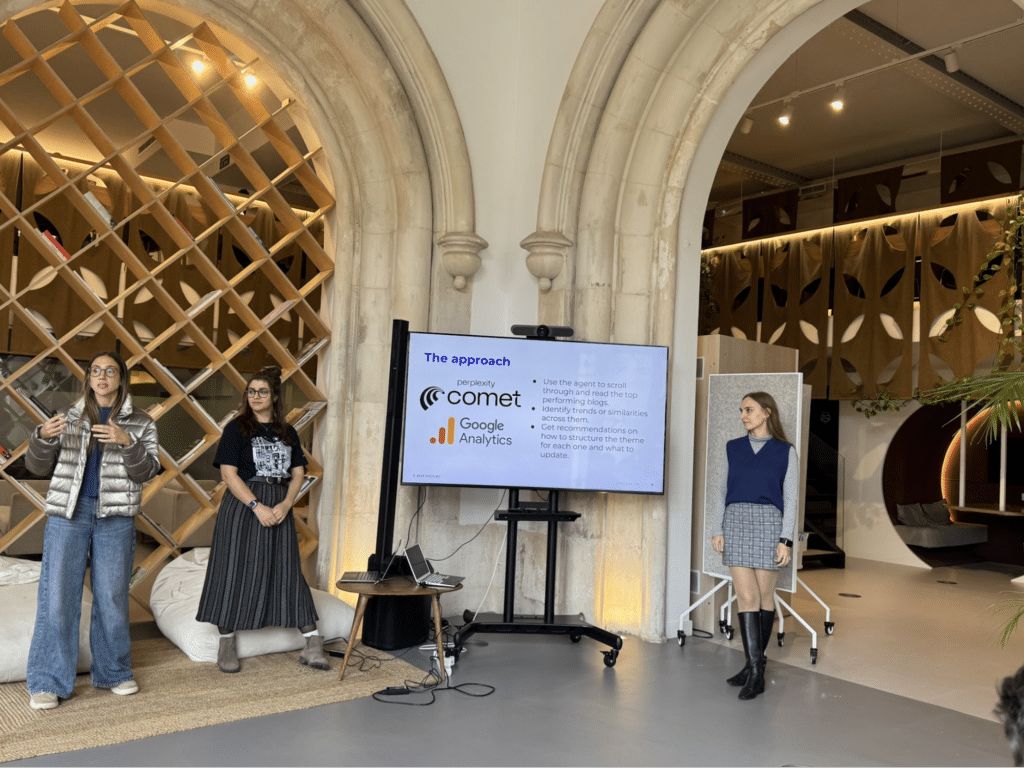
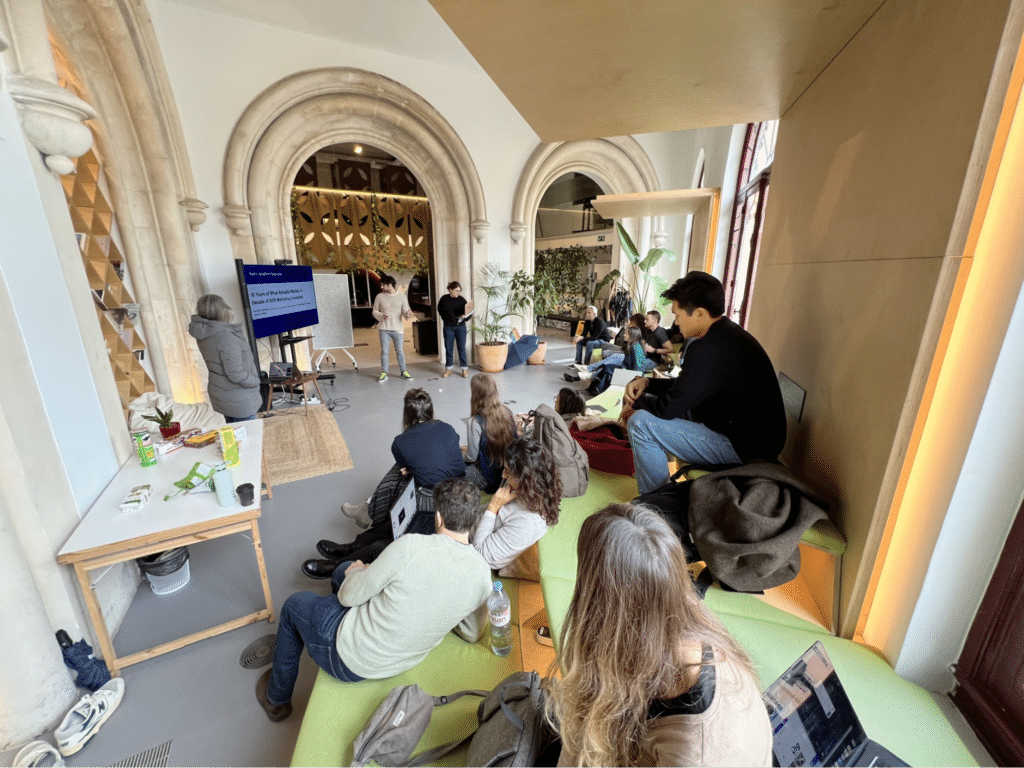
How the hackathon actually worked
Once we kicked off in Lisbon, the structure and the theme did most of the heavy lifting.
We split into small, intentionally mixed teams. Each group had a clear track tied to the broader theme and a concrete mandate for what they needed to produce by the end of the session.
The tracks were practical by design:
- Telling the Blue Seedling story in new ways: using AI to look through our past work, content, and internal knowledge, and turn it into usable narratives and assets.
- Client success: using AI to synthesize patterns across engagements and generate ways to showcase outcomes more clearly and consistently.
- Industry signals and shifts: using AI to analyze what’s changed in B2B marketing and what that means for how we should show up next.
- Remixing and reusing existing assets: using AI to turn years of content into new formats and workflows instead of starting from scratch.
Everyone had clear prompts, a defined time limit, and a shared expectation that whatever they created had to be usable by the end of the session. If you made something, you had to explain who it was for, where it lived, and how it would actually get used.
AI was everywhere in the process, but it wasn’t driving the strategy. We were. Most teams started by thinking together, then used AI to move faster, explore more angles, and get unstuck when they hit walls.
That balance matters. We’re B2B marketers first, not “AI consultants.” Our job is to make marketing work, not make AI look impressive. That mindset shaped every decision in the room.
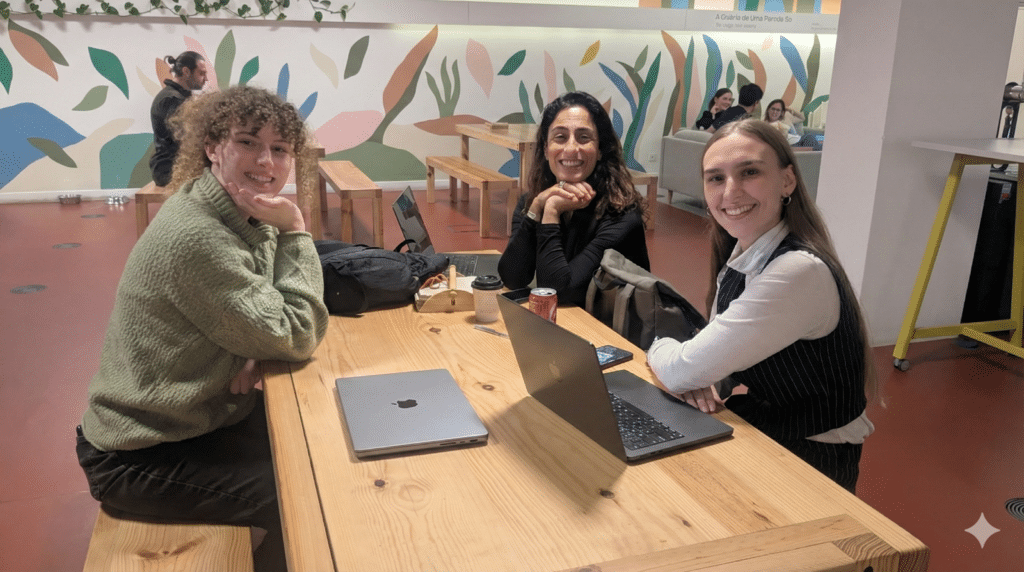
What we actually walked away with
By the end of the session, we didn’t just have notes or ideas. Each team presented concrete outputs tied directly to their track. Not concepts for someday, but materials, plans, and workflows we could pick up and use.
On the marketing side, that included new ways of telling our story, clearer frameworks for showcasing client impact, and concrete content and campaign ideas that are already shaping how we’ll show up this year.
We also left with a few new AI-powered processes we could plug straight into our day-to-day work. Clear workflows around research, content reuse, and internal efficiency that didn’t require a follow-up meeting (or 10) to figure out how to use them.
The real test wasn’t the presentations at the end of the day. It was what happened the week after.
We used the outputs in our 2026 planning. We implemented workflows that didn’t exist before. Some ideas evolved. A few were dropped. The ones that stuck were the ones that held up under real use.
That’s how we think about AI. It’s not the goal. It’s the tool. The goal is better marketing that resonates with the right audience and drives real growth.
Want to try this with your team?
This wasn’t a perfect, polished performance. It was structured work with room for exploration. That balance is intentional.
It was also a working example of how we think AI should show up inside marketing teams and is exactly how we run our AI workshops outside of our team, too.
They’re personalized, practical, and built around field-tested tactics you’ll actually use. We don’t just teach this stuff. We use it every day across content, strategy, analytics, and creative.If you’re curious what a workshop like this could look like for your team, from the prep to the session to the outcomes, let’s talk. Fair warning: it’s a working session. You’ll leave with real ideas and more things to actually do.