

Imagine you’re a cybersecurity startup building a brand in a crowded, noisy market. No one knows who you are. And your product? Not many of your buyers even understand what you’re selling.
And yet…somehow you manage to become the go-to place for your customers and prospects to start connecting with each other.
You build the definitive hub for industry leaders to collaborate and share their own expertise with one another.
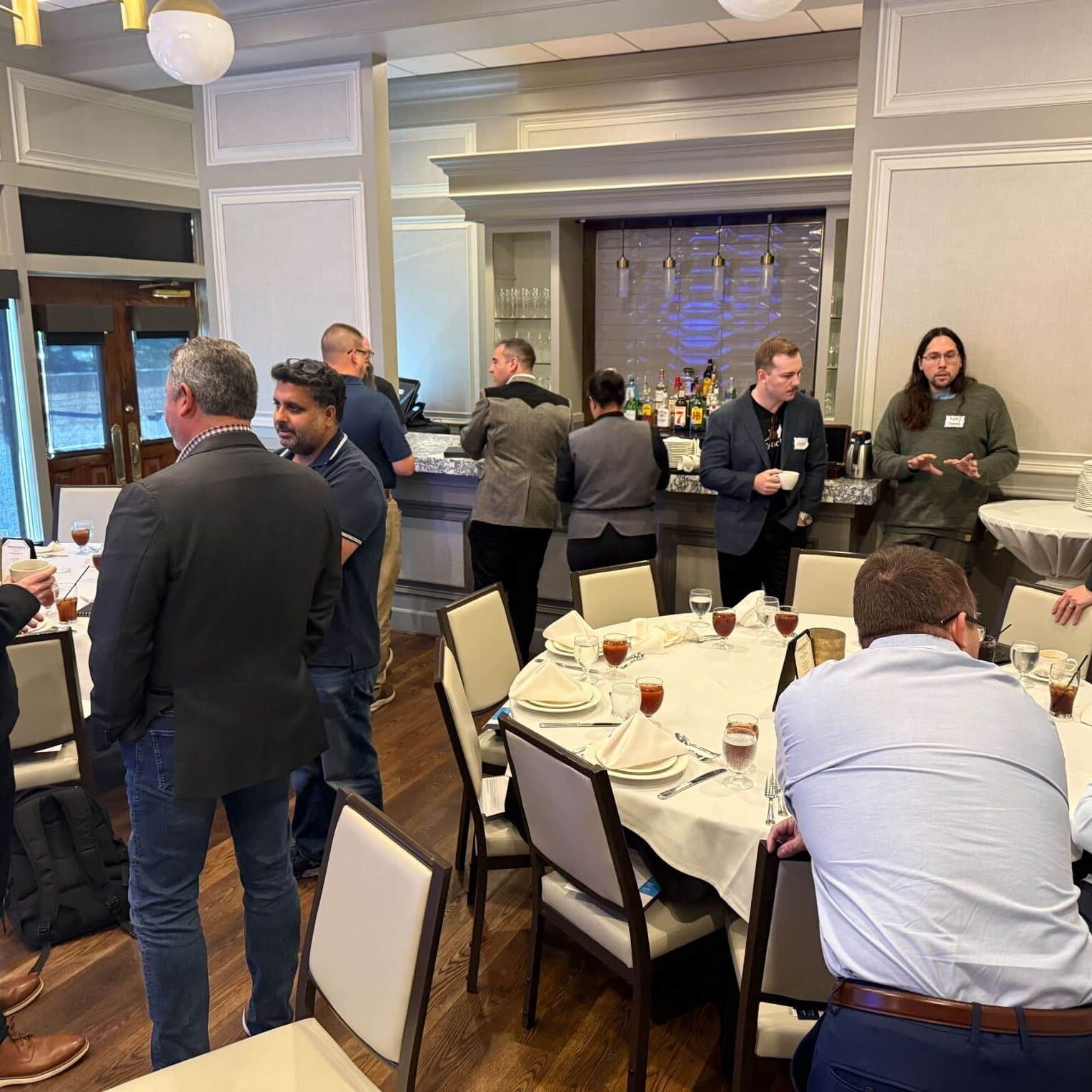

You leverage your community to publish the first market survey in your category.
And suddenly you’re at the epicenter of a white-hot category.
That’s exactly what Cynomi built through their vCISO community – a thriving network of cybersecurity leaders built around shared expertise, collaboration, and real-world problem-solving.
You can read the full story of how Cynomi built a community – and a movement – here. The lesson for other startups: now more than ever, enterprise B2B communities are one of the most effective ways to rise above the noise, and to win the hearts and minds of your buyers.
It’s hard work…but not magic. In this post, we’re going to help you start building the scaffolding for your own enterprise B2B community.


Communities: now more than ever
We’ve written about enterprise B2B buyer communities before – but in 2026 they matter than ever.
Today’s buyers are awash in a sea of similar-sounding AI solutions. The landscape is changing by the day, and trust in traditional self-serving vendor content is eroding fast. The one thing people do trust? Each other. Their network. Communities of like-minded buyers trying to separate the signal from the noise.
We’re not going to lie: communities are hard. Building a community requires a significant investment of time and thoughtfulness, and most startups find it daunting. And rewards aren’t clear, as opposed to other channels where it’s supposedly easy to measure ROI (though it’s often misleading, more here).
Yes, a thriving community is hard to build, but that also makes it hard to copy. A strong community is a sustainable, differentiated competitive moat for your startup. It’s also an asset for every single team at your company, from Marketing to Sales to Customer Success, as well as Product and Engineering. All told, we’re bullish about communities as a B2B marketing channel, and believe it’s still an underused tactic in the B2B marketer’s toolkit.
What is a community? What’s a community in the B2B marketing sense?
A community is just what it sounds like — a group of people who have something in common. In a B2B tech context, communities are usually groups of people who have similar functions or roles in their company, or share a common identity or common goal.
B2B startups (and scaleups) use communities to bring together groups of people that are important to them—members of their target audience, or even people they might want to hire one day. By starting a community and building it intelligently, a B2B startup can get to know their target audience very well and develop lasting relationships with them.
What do communities do?
Communities come together to support each other, learn from each other, and broadly speaking—provide value to each other. The best communities gather both online and offline via Slack, WhatsApp, Facebook, etc. and happy hours, “lunch & learn”s, talks, and other events. Communities work best when there is a designated moderator or team of moderators who plan gatherings, share valuable content, and set the tone of communication.
How can you determine if this may be an effective channel for you?
Determining in advance whether starting a community makes sense for your company at this moment in time is important as this is a sizable investment, and very visible — you won’t fail quietly.
Here are a few questions for assessing if now is the right time for a community.
- Do you have good brands as clients, or at least in your ecosystem? It’s easier to form a community with participants from Deloitte, Mastercard, or Intel. Don’t worry: Fortune 500 household brands aren’t a must, it’s enough to have well-known brands in your ecosystem — for example, CYE’s network of CISOs and security leaders.
- Is your audience geographically dense? Yes, it’s certainly possible to be remote-only today, but it’s still nice to occasionally get together in person.
- Is your audience relatively homogenous (in terms of industry, function, seniority)? If you sell to very different ICPs, it makes sense to have a community that serves as specific a segment as possible, ensuring that your community members will have a lot in common with each other.
- Is your audience willing to share? There are industries and positions that are more “shy,” which can limit the usefulness of the community (though networking and grabbing some drinks together is still valuable).
- Is your audience lacking resources? Some of the best communities we’ve seen were around nascent topics or technologies where there was a dearth of info, tips & tricks, and best practices. For example, Copyleaks’ community for educators and marketers navigating AI-driven content detection and integrity.
- Do you have enough internal resources to support a community? The community is not going to build and run itself—you need someone to own it. Usually, the dedicated owner is a member of the Marketing team (sometimes in collaboration with the Customer Success team). The community manager should be an excellent project manager with strong people skills.
You also need some budget, mostly for events. We’ve done communities on a very shoestring budget otherwise (and even great events can be done inexpensively, for example at your office).
Lastly, you need time. A community isn’t a LinkedIn ad campaign that you can plan and deploy within a week. Plan for at least two quarters to start seeing any tangible results from your community efforts.
What are common community goals? What should you expect to get out of a community?
Demand generation, sales acceleration, and customer upsell. Don’t be shy about having (and measuring) quantitative sales, marketing, and customer success goals. Serving your audience well should absolutely translate to more business for you (“doing well by doing good”). It might be hard to measure directly (folks aren’t going to sign a contract at your community happy hour), but you can measure proxies – for example, looking at the correlation between attending community events and renewing licenses, or seeing if Sales Opportunities who participate in community activities close faster.
Help your audience. The same way your product aims to help your audience, your community should, as well. Provide value, facilitate connections, answer questions. Be authentic and sincere, and make sure to keep a healthy 80%/20% balance of educational / doing good activities to salesy / promotional ones.
Glean insights. We always say that you’ll learn the most about your audience by listening to them (for example, by going on sales and customer success calls). Interacting with your audience as part of the community will give you unparalleled knowledge about their challenges, goals, hopes and dreams, and just what they’re like as human beings. This knowledge will be invaluable for every single team in the company.
Brand building, differentiation. Since communities are rare, having one is a strong positive brand differentiator for your startup.
How great would it be to hear one of these quotes?
“Oh, they’re the cybersecurity startup with the awesome peer dinners.”
“I found this job through their community job board.”
“You should ask this question in the VCsO Slack channel. Last time I got 10 great answers within 10 minutes.”
Audience: Who should you include in your community?
- Clients (active and past)
- Prospects (active and future)
- Ecosystem players (partners, VCs, thought leaders)… But be careful here because you don’t want to dilute your message or have another player promote their own
- Your employees
What’s in it for them: why should your audience become members of your community?
Here are some of the common benefits B2B communities offer to their members:
- Networking
- Knowledge sharing, educational information
Bragging rights. If your community is exclusive and premium (or at least positioned as such – e.g. “NYC leaders in cybersecurity”), belonging is a badge of honor members can brag about. - Fun. Free happy hours where I commiserate (or share success stories!) with peers? Sign me up please. 🍷
Activities / offerings: What are some common community activities?
- In-person events: small group dinners, happy hours, talks, “lunch & learn”’s, breakfasts, meetups, conference activities
- Online events: Zoom meeting or webinar
- Online groups and messaging: online discussion forum, Slack channel, mailing list, Whatsapp group, Facebook group, LinkedIn group
- Job board
- Exclusive content you publish and make available only to community members (or grant access earlier to community members). A community survey is a popular content format
- Interviews, speaking at events
- 1:1 mentorship / pairing between community members
- Product-specific activities: trial access, Client Advisory Board (CAB), training & certifications
The bottom line
Bringing together your audience is hard, but so worth it. If you’re looking for a marketing channel that’s truly differentiated and creates real value, this is your ticket.