

A conference dinner can be the best two hours of your whole week: 20 of the right people, no show floor noise, nobody watching the clock. It can also just be a very expensive steak dinner. Here’s how to land on the right side of that line.
Before the dinner
1. Build some stars into your guest list
Start with the 10 most reputable names you want at the table, like partners, industry-leading customers, a well-known CISO, a friendly analyst, or industry LinkedIn-fluencers, and build the rest around them. Once your invite can say “you’ll be joining leaders from X, Y, and Z,” it has done most of the selling for you.
2. Do the invite math (then invite more)
Even with strong personal outreach, only about 25–40% of executives accept. Then only about 70% of confirmed guests actually show up, and that’s the best rate of any invite-only event format. The rule of thumb: aim for 1.5x your seats in yeses and send 3–4x your seats in invites.
| Seats you want filled | Yeses to aim for | Invites to send |
| 10 | 15 | 30–40 |
| 15 | 22 | 45–60 |
| 20 | 30 | 60–80 |
| 30 | 45 | 90–120 |
Most no-shows aren’t personal. Your guests have three other dinner invites, a meeting that ran long, and a flight that landed at 4 pm. Hands-on practitioners drop off the most: their no-show rate runs about 3x higher than directors and above. If your list skews that way, invite even more.
3. Send the invite from a person, not a brand
A designed email with a big RSVP button looks like the other 15 invites in their inbox that week. A short email or text message from your CEO or the dinner’s host looks like an actual invitation. This doesn’t mean you should axe registration pages; keep your Luma page to express credibility, but make sure a human sends invitees there.
4. Bring a customer or two
A happy customer talking shop over dinner sells better than your AE ever could. It also lowers everyone’s guard, because nobody feels pitched when the person next to them is just a peer who happens to work with you.
5. Get their number, not just their email
An email address puts you in an inbox that’s already buried in conference noise. A phone number gets you a direct line. Make it a required field on your Luma page.
Then use both. Send an email reminder a week out and another the day before, with the time, the address, and who else is coming. On the day of the dinner, have the host text each guest to confirm: “Still on for 7 tonight?” People ignore reminder emails, but they answer texts. And if someone can’t make it, you’ll find out at 3 pm instead of 8, with enough time to give the seat to someone else.
The venue
5. Pick the room, not the restaurant
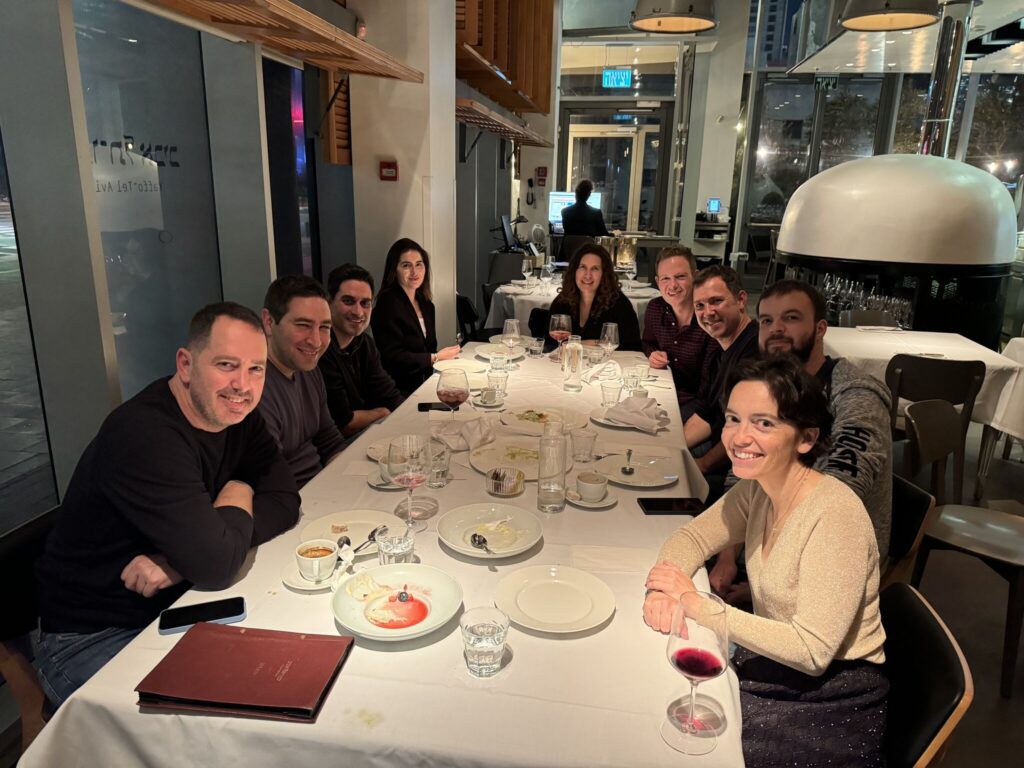
A famous spot with a loud, open dining room means two hours of shouting across the table. A private room where everyone can hear each other wins every time. When you scout, ask to see the actual space and ask what else is booked there that night.
6. Keep it close
Walking distance from the venue matters more than the menu. Every Uber ride is another friction point where a guest can bail, get pulled into a hallway conversation, or decide they’re too tired. If the restaurant has to be farther away, arrange rides yourself, whether it’s a limo or Uber vouchers
In the room
7. Seat people on purpose
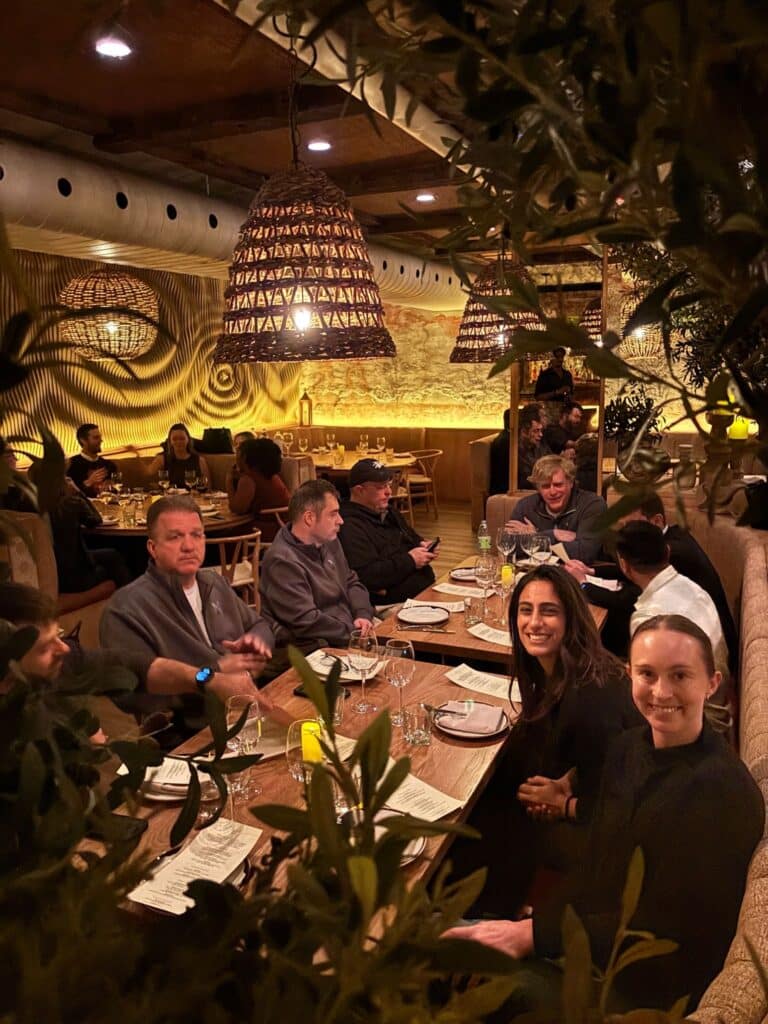
Left alone, your team clusters at one end and prospects talk to people they already know. Make a seating chart. Spread your team across every table, seat each target account next to a peer or a customer (not your salesperson), and put the host in the middle so they can reach the most people. And don’t forget to brand the place cards.
8. Brief your team like it’s an important sales meeting
Everyone on your team should know who they’re sitting near, what each guest’s company does, and one good question to ask them. A 15-minute huddle that afternoon turns small talk into productive conversation.
9. One toast. Zero decks
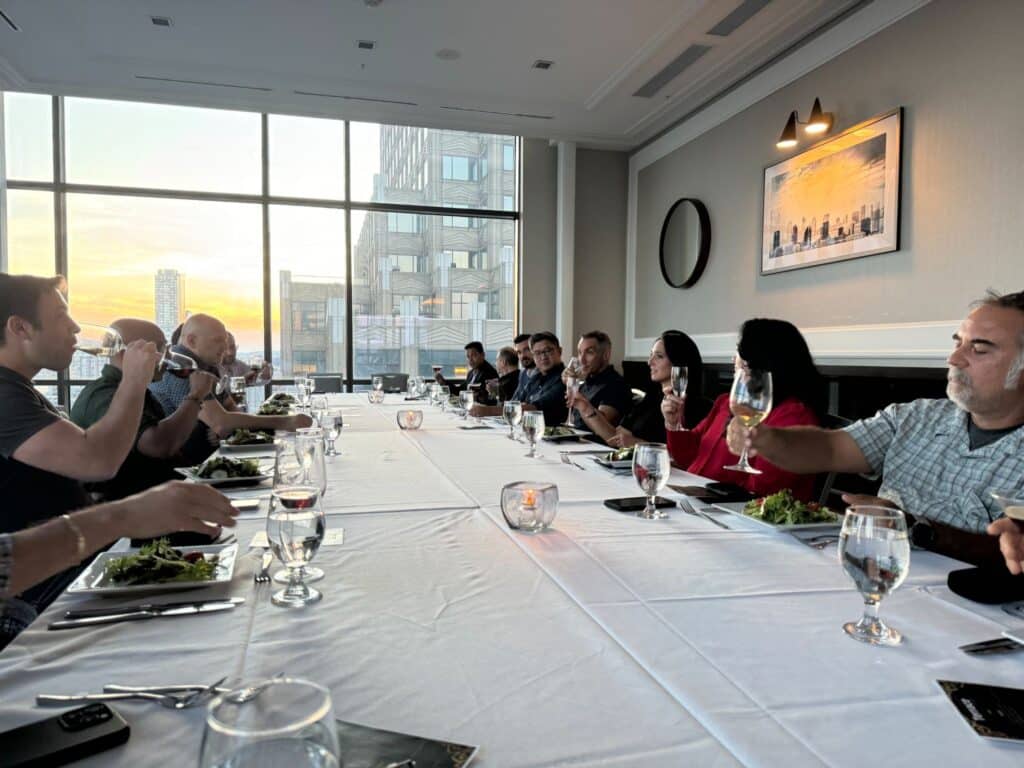
The host speaks once, for two minutes, about why these people are in the room. That’s it. No slides, no demo, no “quick overview of the platform.” If you turn it into a webinar with appetizers, nobody comes back next year.
After the dinner
11. Debrief that night or the morning after
By day three of a conference, no one remembers who said what at Monday’s dinner. Get your team together while it’s fresh. Go through the guest list, capture the key conversations, and assign an owner to every follow-up.
12. Follow up with everyone. Yes, everyone
At a trade show, you follow up with hot leads and batch the rest. A dinner is different. Every guest gets a personal note, including the quiet ones and the ones who clearly aren’t buying this year. Mention something real from the conversation: “Loved your point about vendor consolidation; here’s the report I mentioned” beats “Thanks for joining us” every time.
The bottom line
Want your next dinner to land on the right side of that line? Blue Seedling’s Field Marketing as a Service can take it off your plate, from the guest list to the follow-up notes, plus everything else happening at the show. Learn more and book a consultation.